

Interactions of the eosinophil
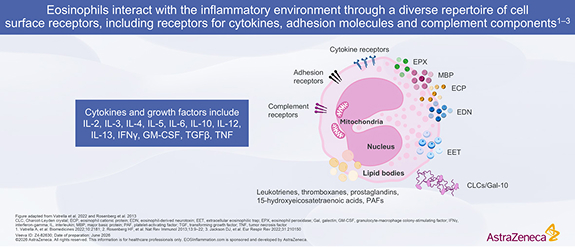
The cellular features of eosinophils, including cell surface receptors, and the inflammatory mediators and granule proteins that the cell releases in response to interactions with the inflammatory environment.

The cellular features of eosinophils, including cell surface receptors, and the inflammatory mediators and granule proteins that the cell releases in response to interactions with the inflammatory environment.
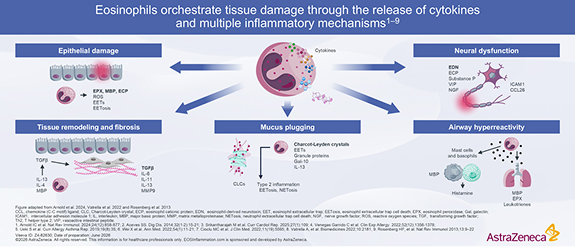
An overview of the downstream effects of eosinophilic inflammation, highlighting how eosinophil-derived inflammatory mediators, granule proteins, and cytokines contribute to mechanisms of tissue damage, fibrosis, mucus plugging, neural dysfunction, and airway hyperreactivity.1–3
Visual aid summarizing that eosinophils contribute to asthma pathology by driving chronic inflammation that results in airway remodeling, excess mucus secretion, and airway hyperresponsiveness.4
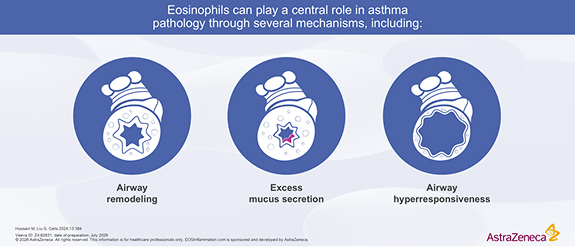
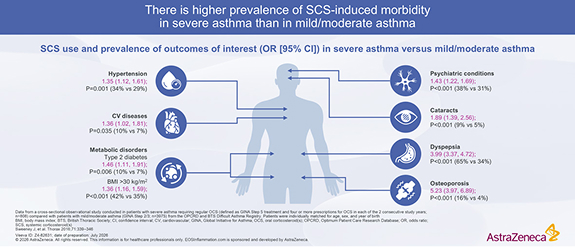
Figure comparing the prevalence of outcomes associated with SCS use in severe versus mild/moderate asthma, demonstrating the greater burden for patients with more severe disease.5
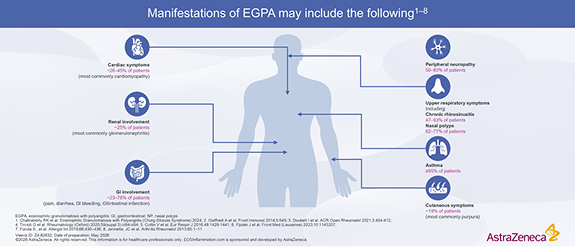
The key systemic manifestations of EGPA and their prevalence among affected patients.
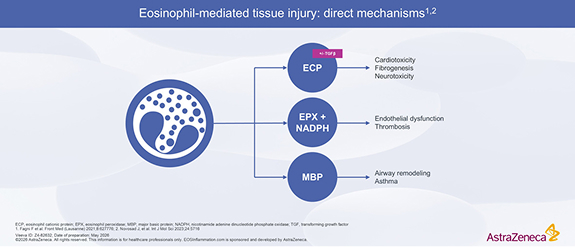
Eosinophils directly drive tissue injury through the release of cytotoxic granule proteins, each associated with a distinct type of organ damage.6
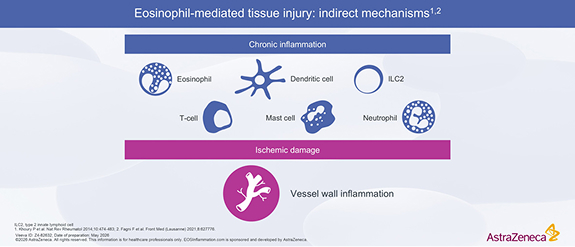
Eosinophils indirectly contribute to tissue injury via the recruitment and activation of other immune cells.7
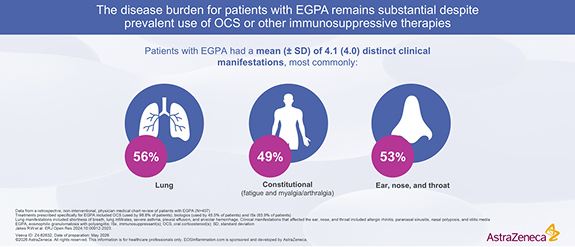
The most common clinical manifestations of EGPA, which remain a burden despite treatment.
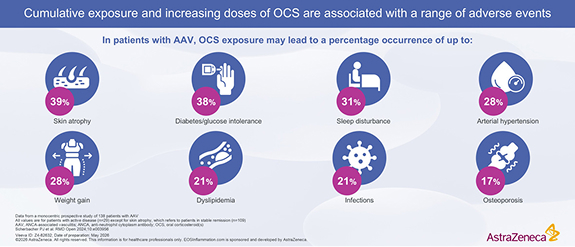
Occurrence of adverse events associated with OCS use in patients with AAV, supporting that corticosteroid complications are very common in these patients and that toxicity is dose dependent.8
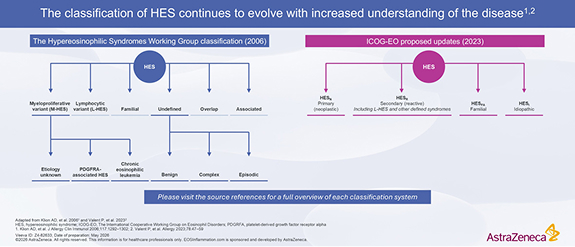
Various classifications for HES have been proposed over time, with criteria continuing to evolve as the understanding of eosinophilic disorders advances.9
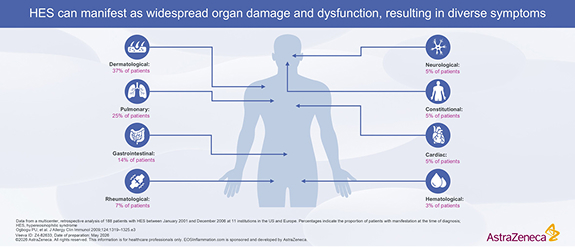
The key systemic manifestations of HES and their prevalence among affected patients.
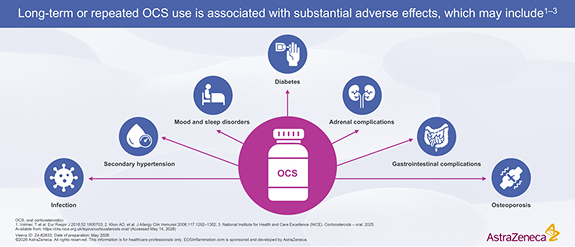
Visual aid summarizing the varied adverse events associated with long-term or repeated OCS use, highlighting the variation in severity and affected organ systems.
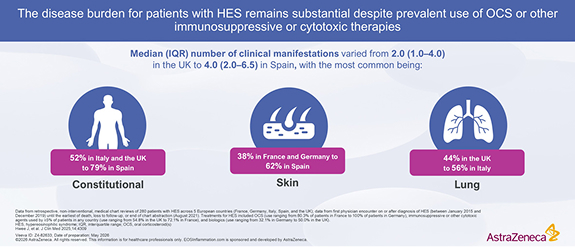
The most common clinical manifestations of HES across Europe, which remain a burden despite treatment.
AAV, antineutrophil cytoplasm antibodies (ANCA)-associated vasculitides; EGPA, eosinophilic granulomatosis with polyangiitis; HES, hypereosinophilic syndrome; OCS, oral corticosteroid(s); SCS, systemic corticosteroid(s); SEA, severe eosinophilic asthma

EOSInflammation.com has been
developed by AstraZeneca.
For healthcare professionals only.
© 2026 AstraZeneca
Veeva ID: Z4-82629
Date of preparation: July 2026