Are you a healthcare professional?

EOS-Inflammation-logo
No, I am not a healthcare professional
AstraZeneca Logo
  • Home
  • EOS Education
    • EOS Education
    • EOS Inflammation
    • SEA
    • EGPA
    • HES
  • Latest Science
  • Resource Library
  • EOS Education
  • EGPA

EGPA

EGPA (eosinophilic granulomatosis with polyangiitis) is a rare, chronic inflammatory disease characterized by eosinophil-rich granulomatous inflammation and small‑ to medium‑sized vessel vasculitis, associated with adult-onset asthma, eosinophilia and multi-organ involvement.1–6 Learn more about the role of eosinophils in EGPA, their contribution to disease pathology, and the clinical impact of current treatment approaches in this educational module.

Module synopsis

The burden of eosinophil-driven inflammation in the complex manifestations of EGPA

Eosinophils as drivers of pathology in EGPA

Eosinophil-derived proteins as markers of disease activity

The impact of steroid and immunosuppressant exposure

Module synopsis

  • EGPA is a rare disease that is characterized by eosinophil-rich granulomatous inflammation and small-to medium-sized vessel vasculitis,1,3,5–7 with ANCA-positive and ANCA-negative phenotypes that are associated with distinct clinical manifestations, including cardiomyopathy, peripheral neuropathy, and asthma2–4,8
  • Eosinophils are key effector cells in EGPA that contribute to organ-specific damage both directly and indirectly7
  • Higher serum concentrations of eosinophil-derived proteins have been detected in active EGPA compared with EGPA in remission and healthy controls, highlighting the role of eosinophils in active disease9
  • Beyond traditional measures such as BEC, there is growing interest in the potential role of eosinophil-derived proteins as clinical biomarkers9
  • Long-term or frequent use of OCS and immunosuppressants is associated with a high risk of adverse events, and patients with EGPA continue to experience high disease burden despite OCS use10,11

Back to top

The burden of eosinophil-driven inflammation in the complex manifestations of EGPA 

EGPA is a systemic inflammatory disorder characterized by late-onset asthma, peripheral eosinophilia, and small- to medium-vessel vasculitis.1–4 While traditionally classified as a form of ANCA-associated vasculitis, EGPA is distinguished from other forms in this group by its association with peripheral eosinophilia, asthma, and chronic rhinosinusitis with nasal polyps.3,8 Although classified as an ANCA-associated vasculitis, the majority of patients (60–70%) are ANCA negative.3


EGPA is now understood as a complex, multi-phase disease.2,4,12 Disease evolution typically follows a step-wise pattern, beginning with a prodromal phase characterized by asthma and sinusitis.12 After a variable period of time, patients may progress to an eosinophilic phase, categorized by marked eosinophilia with lung tissue infiltration, gastrointestinal involvement, and eosinophilic cardiomyopathy.12 Some patients then progress to a vasculitic phase, with manifestations including glomerulonephritis, palpable purpura, and neuropathy.2,12 Importantly, disease progression may not occur, with some patients not experiencing any eosinophilic or vasculitic manifestations. When progression does occur, it can be at varying speeds, with disease phases sometimes overlapping.12 This heterogeneity in disease presentation and progression can contribute to diagnostic delays.2,12


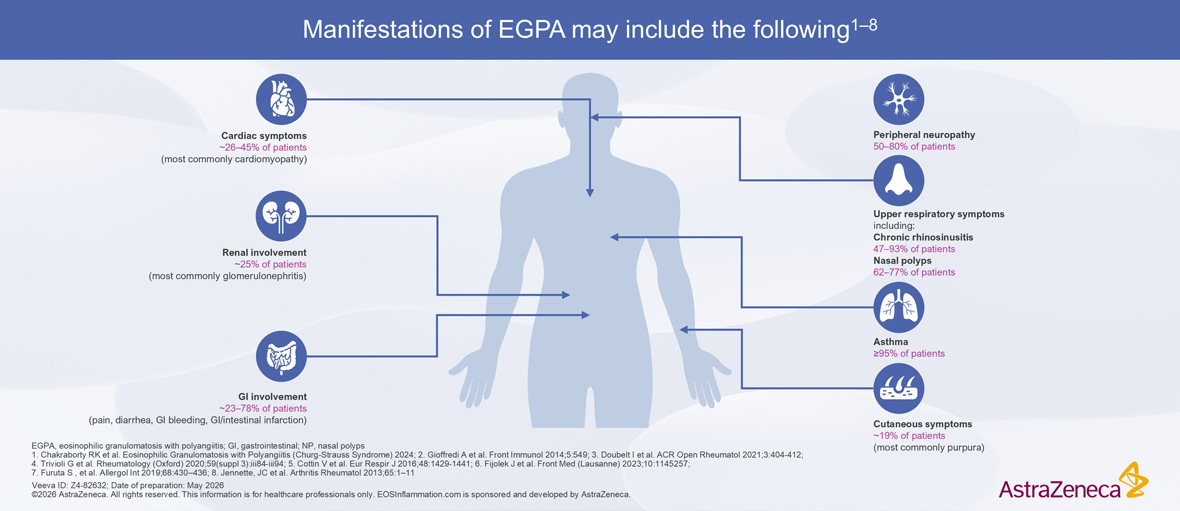
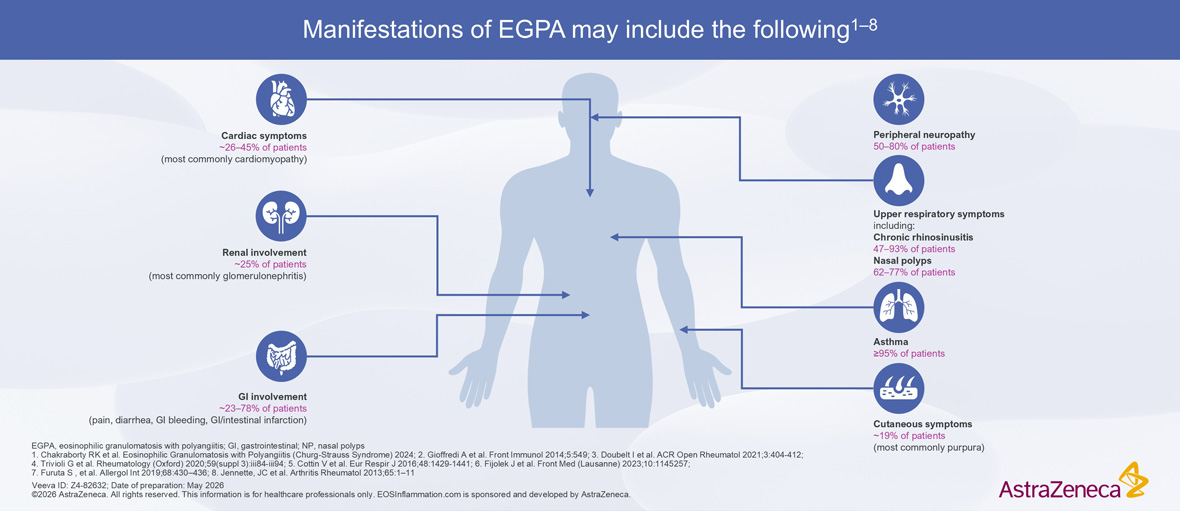
EGPA Clinical Manifestations Symptoms EGPA Clinical Manifestations Symptoms


Asthma is a defining feature of EGPA, affecting more than 95% of patients and often preceding systemic disease by several years.2,3 This asthma is frequently severe, adult-onset, and difficult to control.2,3 Chronic rhinosinusitis and nasal polyposis were also highly prevalent, reflecting eosinophilic inflammation throughout the upper and lower airways.3,8


Beyond the airways, EGPA is a multisystem disease with manifestations driven by eosinophilic tissue infiltration, immune-mediated vascular inflammation, or a combination of both.2,4,6,7,12


Clinical manifestations of EGPA are therefore diverse and frequently severe:2

  • Peripheral neuropathy is reported in approximately 50–80% of patients5,3,4
  • Cardiac involvement is observed in 26–45% of patients and commonly presents as cardiomyopathy2,3
  • Renal involvement affects around one-quarter of patients, most commonly presenting as glomerulonephritis3
  • Gastrointestinal manifestations are reported in approximately 23–78% of cases, ranging from pain and diarrhea to gastrointestinal bleeding and
intestinal infarction3,5,12
  • Cutaneous involvement occurs in approximately 19% of patients, most commonly as palpable purpura4

The breadth of organ involvement highlights the systemic nature of EGPA and the cumulative burden imposed by eosinophilic inflammation and other disease mechanisms.10,12 Even when life-threatening manifestations are avoided, ongoing symptoms such as asthma, sinonasal disease, peripheral neuropathy, and fatigue represent a high disease burden.10


Importantly, EGPA is a chronic and relapsing condition.10,12 While survival has improved with modern treatment approaches, many patients experience recurrent disease flares, progressive organ damage, or persistent symptoms over time.1 Disease activity may fluctuate independently across organ systems, with airway disease often remaining active even when vasculitic features are controlled.12,13 This relapsing-remitting course contributes to long-term morbidity and underpins the need for sustained disease control strategies.10

 

Back to top

Eosinophils as drivers of pathology in EGPA 

Eosinophils are recognized as key effector cells in EGPA, where they accumulate in multiple organs, contributing directly and indirectly to tissue injury and the amplification of local inflammatory responses.14


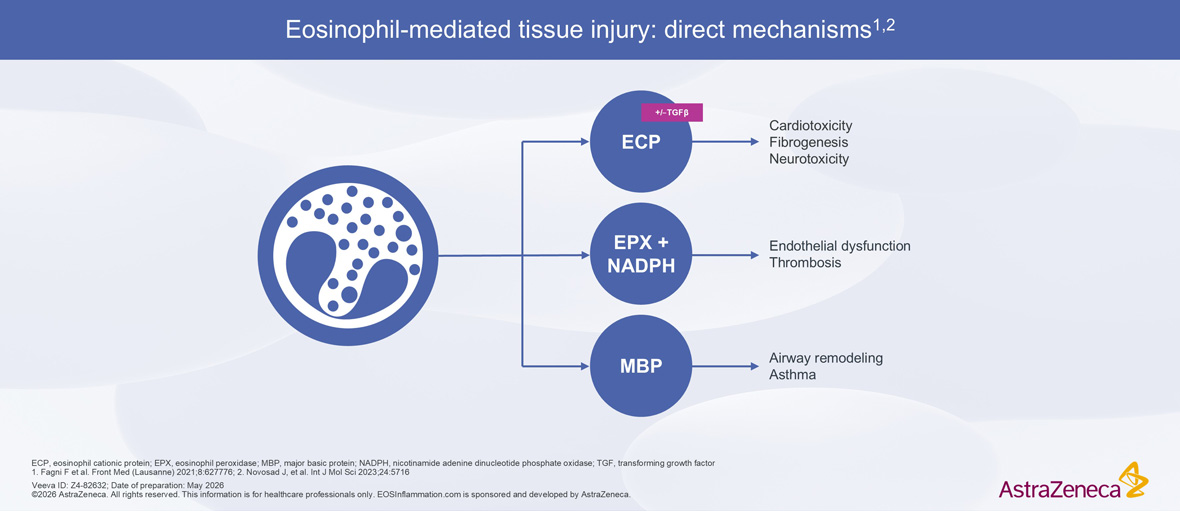
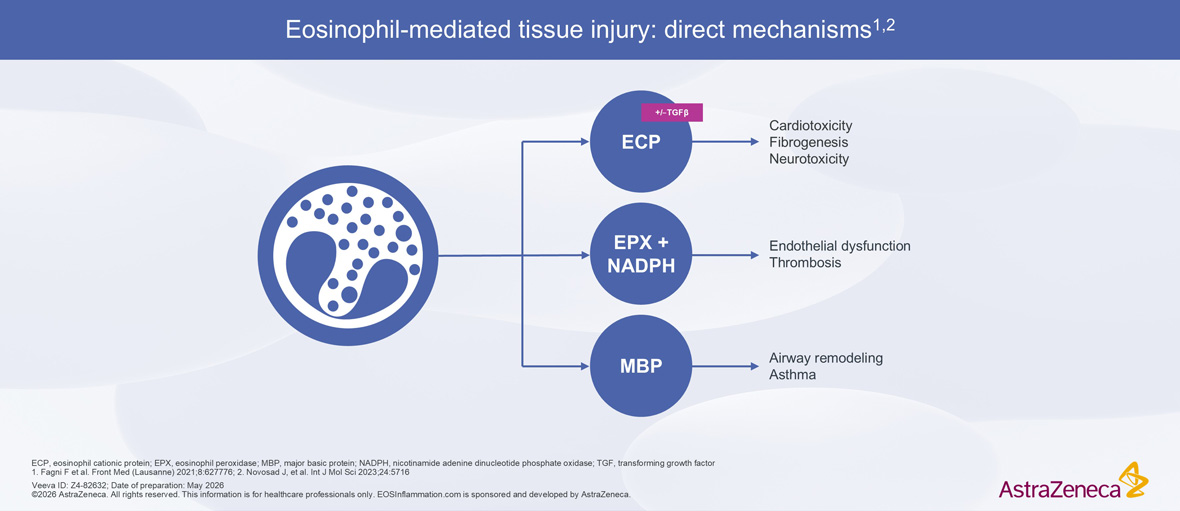
Eosinophil Mediated Tissue Injury Mechanisms Eosinophil Mediated Tissue Injury Mechanisms


Eosinophils induce direct tissue damage through the release of diverse cytotoxic proteins, including MBP, ECP, and EPX.14 These proteins exert direct cytotoxic effects on various cell types, including epithelial cells, endothelial cells, cardiomyocytes, and neural tissue, explaining the diverse organ involvement observed in EGPA.14,15


Eosinophils also interact dynamically with their local micro-environment, engaging with endothelial cells, fibroblasts, smooth muscle cells, and immune cells.9,14,16,17 Through these interactions, eosinophils can promote tissue remodeling and fibrosis, and sustain inflammatory signaling, particularly within the airways and myocardium.14 Eosinophils can also induce a prothrombotic environment through several mechanisms, including increased expression of adhesion molecules, tissue factor, and vasoactive substances, leading to increased coagulation.14


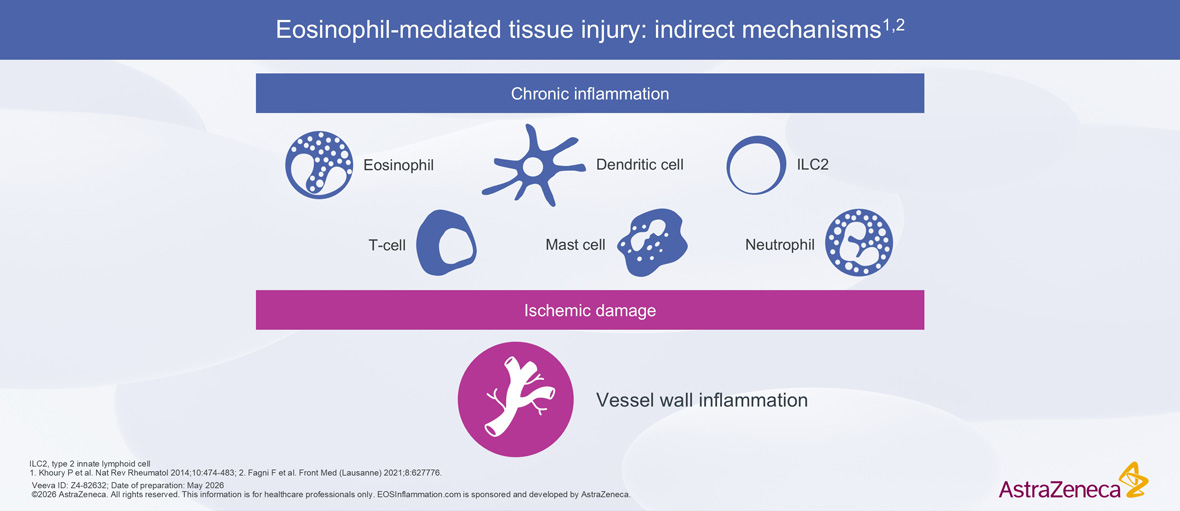
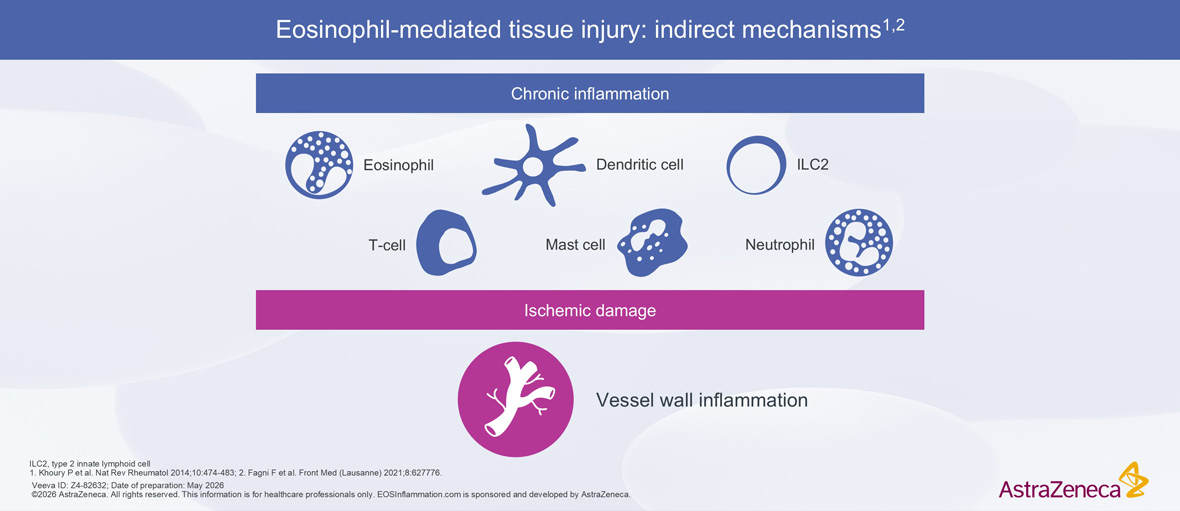
Eosinophil Mediated Tissue Injury Indirect Mechanisms Eosinophil Mediated Tissue Injury Indirect Mechanisms


Beyond their capacity to cause direct tissue damage, eosinophils contribute to organ-specific damage through the indirect mechanisms of chronic inflammation and ischemic damage.7,18


Eosinophils contribute to chronic inflammation by interacting locally with numerous inflammatory and resident cell types, including T cells, mast cells, neutrophils, dendritic cells, and type 2 innate lymphoid cells.5,9,14 These interactions create a self-sustaining inflammatory microenvironment in which eosinophils both respond to, and propagate, inflammatory signals.12,19 In the airways, this process contributes to persistent asthma symptoms, airway hyperresponsiveness, and structural remodeling, even when systemic inflammatory markers appear controlled.18 Eosinophils also participate in the inflammation of vessel walls and may thereby play a role in the vasculitis-related ischemia of downstream tissues such as nerves.7


Chronic eosinophil-driven inflammation and vascular injury can persist over time, contributing to cumulative organ damage and relapse.3

Back to top

Eosinophil-derived proteins as markers of disease activity

Clinical practice continues to rely on peripheral blood eosinophil counts as a biomarker in EGPA, with consistently elevated eosinophil levels (typically absolute count ≥1000 cells/µL) in patients presenting with adult-onset asthma, chronic rhinosinusitis, or neuropathy as a strong diagnostic clue.20 High eosinophil counts are associated with systemic manifestations in EGPA, including increased likelihood of extrapulmonary disease and peripheral nerve involvement.20 Eosinophil counts are generally lower in patients treated with SCS or biologic therapies, in whom a lower absolute eosinophil count of ≥500 cells/µL may be used as a threshold to suspect EGPA.21,22


Beyond traditional measures such as BEC, there is growing interest in the potential role of eosinophil-derived proteins as clinical biomarkers.9 Galectin-10, also known as CLC, and eosinophil-derived granule proteins, such as ECP and EDN, are elevated in the serum of patients with active EGPA compared with those in remission.9 Upon normalization of serum concentrations by BEC, Galectin-10 demonstrated the strongest relationship with disease activity, positively correlating with BVAS score (p<0.0001), therefore underscoring its potential as a biomarker of active disease.9

Back to top

The impact of steroid and immunosuppressant exposure

Aim of their use

Systemic corticosteroids, particularly OCS, have historically formed the backbone of EGPA disease management due to their rapid and broad
anti-inflammatory effects.10 In some patients, additional immunosuppressive agents, such as cyclophosphamide, azathioprine, and methotrexate, are prescribed with the aim of inducing remission, managing relapses, and maintaining disease control.10,13,23 However, the use of these immunosuppressants in EGPA is off label and largely based on evidence and clinical experience in other vasculitic diseases.10,13,23–26

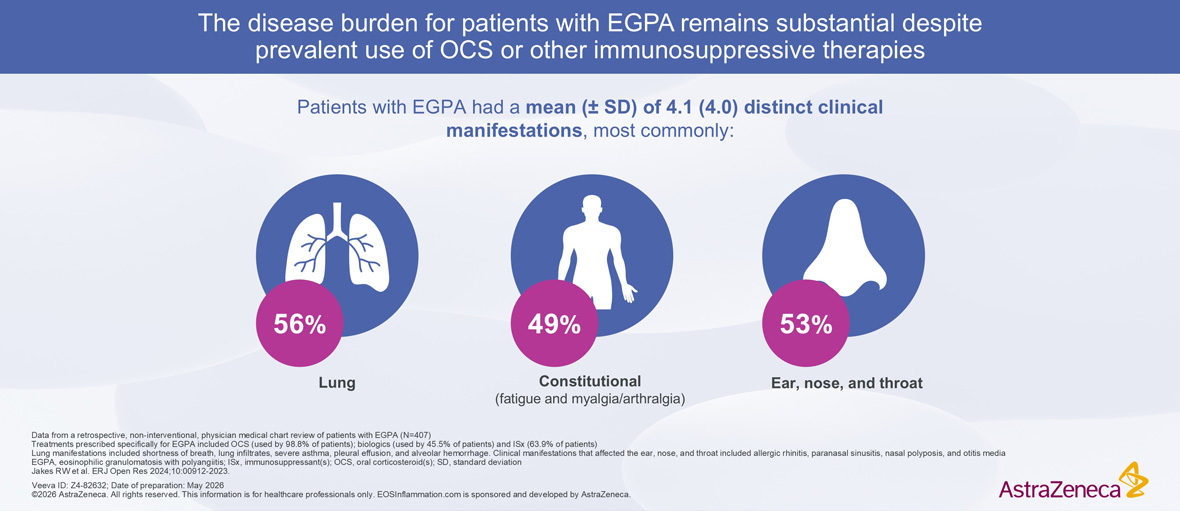
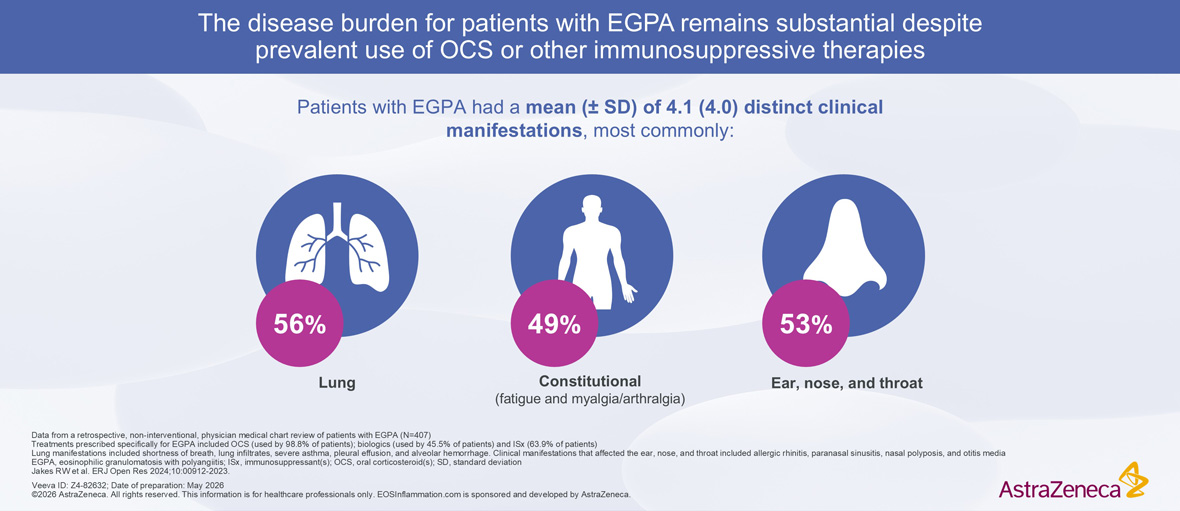
In a large, retrospective, non-interventional, longitudinal European chart review, 98.8% of patients with EGPA had received OCS, with a median (IQR) maximum daily dose of 30 (10–50) mg and a median (IQR) treatment duration of 22.2 (11.5–34.8) months. Over half of patients were treated with additional immunosuppressive therapies.10 Importantly, treatment exposure did not equate to disease quiescence.10 Despite OCS use, many patients with EGPA continue to experience a high burden of disease activity and multisystem involvement.4,10


EGPA Disease Burden Clinical Manifestations EGPA Disease Burden Clinical Manifestations

Risk of long-term OCS and immunosuppressant exposure

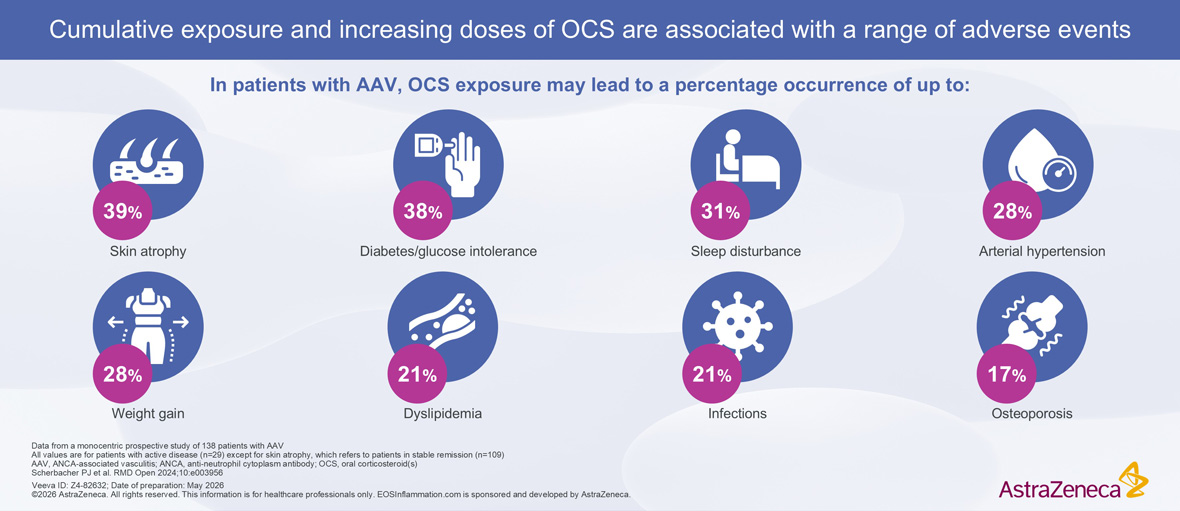
The reliance on prolonged OCS therapy comes with associated risks.4,10 Most patients with EGPA receive high-dose systemic corticosteroids for extended periods, and many require repeated courses due to relapses.4,10 Evidence from broader inflammatory disease populations demonstrates that long-term or frequent OCS use, even at relatively low doses (~5 mg/day for >1 year), is associated with a high risk of side effects.27,28 Over time, these adverse effects contribute to impaired quality of life, reduced work productivity, and long-term comorbidity.3,4,10,29


OCS Adverse Events AAV Patients OCS Adverse Events AAV Patients


Similarly, long-term use of other non-specific immunosuppressants (eg cyclophosphamide, azathioprine, and methotrexate) is associated with considerable adverse events, including increased susceptibility to infections, malignancy risk, cytopenias, hepatotoxicity, and cumulative organ damage.11,24–26 This further limits their suitability for sustained disease management and underscores the need for alternative approaches.

Unmet needs

Collectively, these data illustrate a key aim in EGPA management: the ability to achieve sustained disease control while reducing long-term exposure to systemic corticosteroids and non-specific immunosuppressants.4,10,11,30 Despite intensive treatment, many patients continue to experience ongoing symptoms, relapses, and treatment-related side effects.10

Back to top

ANCA, antineutrophil cytoplasmic antibody; BEC, blood eosinophil count; BVAS, Birmingham Vasculitis Activity Score; CLC, Charcot-Leyden crystals; CRSwNP, chronic rhinosinusitis with nasal polyps; ECP, eosinophil cationic protein; EDN, eosinophil-derived neurotoxin; EPX, eosinophil peroxidase; EGPA, eosinophilic granulomatosis with polyangiitis; IQR, interquartile range; MBP, major basic protein; OCS, oral corticosteroid(s); SCS, systemic corticosteroid(s). 

  1. Furuta S, et al. Allergol Int 2019;68:430–436
  2. Trivioli G, et al. Rheumatol Oxf 2020;59(Suppl. 3):iii84–iii94
  3. Chakraborty RK, Aeddula NR. Eosinophilic granulomatosis with polyangiitis (Churg-Strauss syndrome). Treasure Island, FL, USA: StatPearls Publishing, 2023
  4. Doubelt I, et al. ACR Open Rheumatol 2021;3:404–412
  5. Gioffredi A, et al. Front Immunol 2014;5:549
  6. Jennette JC, et al. Arthritis Rheum 2013;65:1–11
  7. Khoury P, et al. Nat Rev Rheumatol 2014;10:474–483
  8. Cottin V, et al. Eur Respir J 2016;48:1429–1441
  9. Fukuchi M, et al. Arthritis Rheumatol 2021;73:1683–1693
  10. Jakes RW, et al. ERJ Open Res 2024;10:00912–02023
  11. Hsu D, Katelaris C. Aust Prescr 2009;32:68–71
  12. Fijolek J, Radzikowska E. Front Med (Lausanne) 2023;10:1145257
  13. Emmi G, et al. Nat Rev Rheumatol 2023;19:378–393
  14. Fagni F, et al. Front Med (Lausanne) 2021;8:627776
  15. Novosad J, et al. Int J Mol Sci 2023;24:5716
  16. McBrien CN, Menzies-Gow A. Front Med (Lausanne) 2017;4:93
  17. Wilson SJ, et al. Clin Exp Allergy 2013;43:1342–1350
  18. Hussain M, Liu G. Cells 2024;13:384
  19. Januskevicius A, et al. Diagnostics (Basel) 2024;14:2448
  20. Matucci A, et al. Biomedicines 2023;11:776
  21. Kuang FL. Med Clin North Am 2020;104:1–14
  22. Solans-Laqué R, et al. Eur J Intern Med 2024;128:45–52
  23. Chung SA, et al. Arthritis Rheumatol 2021;73:1366–1383
  24. Electronic Medicines Compendium (EMC). Cyclophosphamide tablets 50 mg: summary of product characteristics (SmPC). 2016. Available from: https://www.medicines.org.uk/emc/product/1813/smpc/print (Accessed May 15, 2026)
  25. Electronic Medicines Compendium (EMC). Azathioprine tablets 50 mg: summary of product characteristics (SmPC). 2026. Available from: https://www.medicines.org.uk/emc/product/14296/smpc/print (Accessed May 15, 2026)
  26. Electronic Medicines Compendium (EMC). Methotrexate 25 mg/ml injection: summary of product characteristics (SmPC). 2024. Available from: https://www.medicines.org.uk/emc/product/1404/smpc#gref (Accessed May 15, 2026)
  27. Volmer T, et al. Eur Respir J 2018;52:1800703
  28. Price DB, et al. J Asthma Allergy 2018;11:193–204
  29. Buguth B, et al. Pharmacoecon Open 2026;10:197–207
  30. Scherbacher PJ, et al. RMD Open 2024;10:e003956
AZ-logo

EOSInflammation.com has been
developed by AstraZeneca.
For healthcare professionals only.
© 2026 AstraZeneca

  • Privacy Notice
  • Cookie Notice
  • Legal Statement
  • Contact Us

Veeva ID: Z4-82632
Date of preparation: May 2026